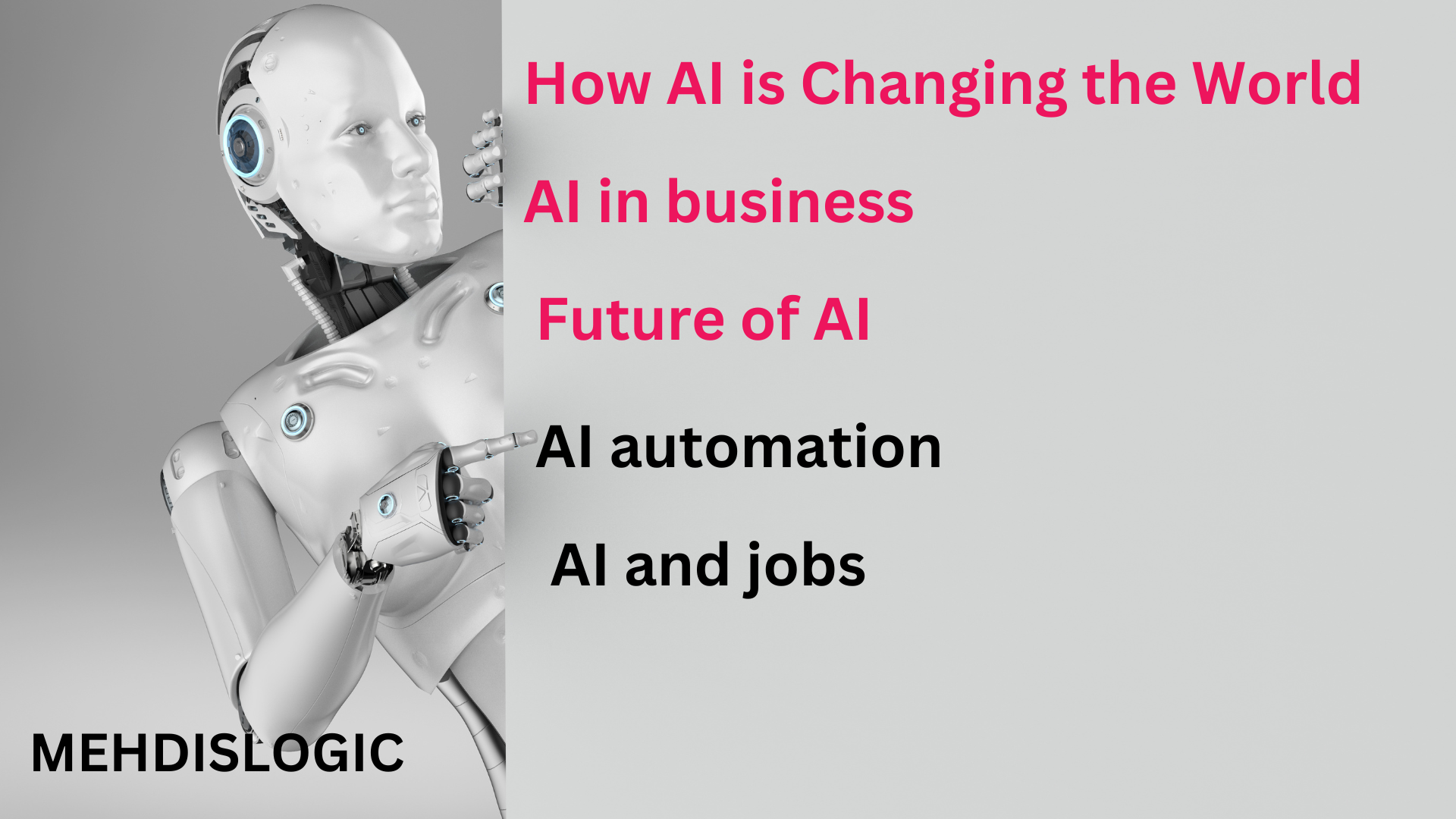
How AI is Changing the World: A Friendly Dive into Our Tech-Driven Future
Ever wondered how AI is changing the world? Well, you’re in the right place! Artificial intelligence isn’t just a sci-fi dream anymore; it’s here, and it’s transforming everything from our morning routines to the way businesses operate. Let’s take a friendly stroll through the AI-driven landscape of 2025 and see what’s buzzing.
Table of Contents
- AI in Our Daily Lives
- The Role of AI in Business
- AI and the Future of Work
- Advancements in AI Technology
- AI in Healthcare and Medicine
- AI Transforming Various Industries
- Ethical Concerns of AI in Modern Society
- Will AI Replace Human Jobs in the Future?
- The Future of AI: What’s Next?
- Conclusion
- FAQs
AI in Our Daily Lives
Remember when your fridge was just a fridge? Now, it’s a smart assistant reminding you to buy milk. From personalized playlists to smart home devices, AI has become our daily companion, making life a tad bit easier and a lot more interesting.
The Role of AI in Business
Businesses are riding the AI wave to streamline operations and boost productivity. AI is transforming wealth management by processing vast amounts of data, reducing barriers for new competitors, and enabling services that previously required entire teams.
AI and the Future of Work
Worried about robots taking over your job? It’s a mixed bag. While AI might handle repetitive tasks, it’s also creating new roles we hadn’t imagined before. The key is to stay adaptable and keep learning. According to a report by the World Economic Forum, by 2025, AI will have displaced 75 million jobs globally but will have created 133 million new ones.
Advancements in AI Technology
AI is evolving at lightning speed. From autonomous vehicles to advanced language models, the tech frontier is expanding. OpenAI’s new AI agent, Operator, can perform tasks autonomously, such as purchasing items online or updating social media profiles, showcasing the rapid advancements in AI capabilities.
AI in Healthcare and Medicine
Healthcare is getting a tech makeover. AI assists in early disease detection, personalized treatment plans, and even robotic surgeries, leading to better patient outcomes and more efficient care. AI delivers more accuracy and efficiency, leading to cheaper healthcare and better outcomes for patients.
AI Transforming Various Industries
From agriculture to entertainment, AI’s footprint is everywhere. It’s optimizing supply chains, enhancing customer experiences, and even helping farmers monitor crop health. The future is AI-integrated, and industries are adapting swiftly.
Ethical Concerns of AI in Modern Society
With great power comes great responsibility. Ethical concerns like data privacy, algorithmic bias, and the potential for misuse are hot topics. It’s crucial to develop and implement AI in ways that are fair, transparent, and respect individual rights.
Will AI Replace Human Jobs in the Future?
The big question! While AI will automate certain tasks, it also opens doors to new opportunities. The focus should be on reskilling and upskilling to stay relevant in this AI-driven world. AI may affect 40% of jobs globally and impact economies, but it will also create new jobs as it transforms industries.
The Future of AI: What’s Next?
Buckle up! The AI journey is just beginning. Future developments could include more intuitive personal assistants, advancements in AI ethics, and even more seamless integration into our daily lives. The horizon is vast, and the possibilities are endless.
Conclusion
AI is undeniably changing the world, weaving itself into the fabric of our daily lives, businesses, and industries. Embracing this change with a focus on ethical considerations and continuous learning will help us navigate this exciting frontier.
FAQs
Q1: What is artificial intelligence?
A1: Artificial intelligence (AI) refers to the simulation of human intelligence in machines programmed to think and learn like humans.
Q2: How is AI is changing the world used in healthcare?
A2: AI is used in healthcare for tasks like early disease detection, personalized treatment plans, and assisting in robotic surgeries.
Q3: Will AI take over all jobs?
A3: Not all. While AI will automate certain tasks, it will also create new job opportunities. Adaptability and continuous learning are key.
Q4: What are the ethical concerns surrounding AI?
A4: Ethical concerns include data privacy issues, algorithmic bias, and the potential misuse of AI technologies.
Q5: How can businesses benefit from AI?
A5: Businesses can use AI to streamline operations, enhance customer experiences, and make data-driven decisions to boost productivity.